
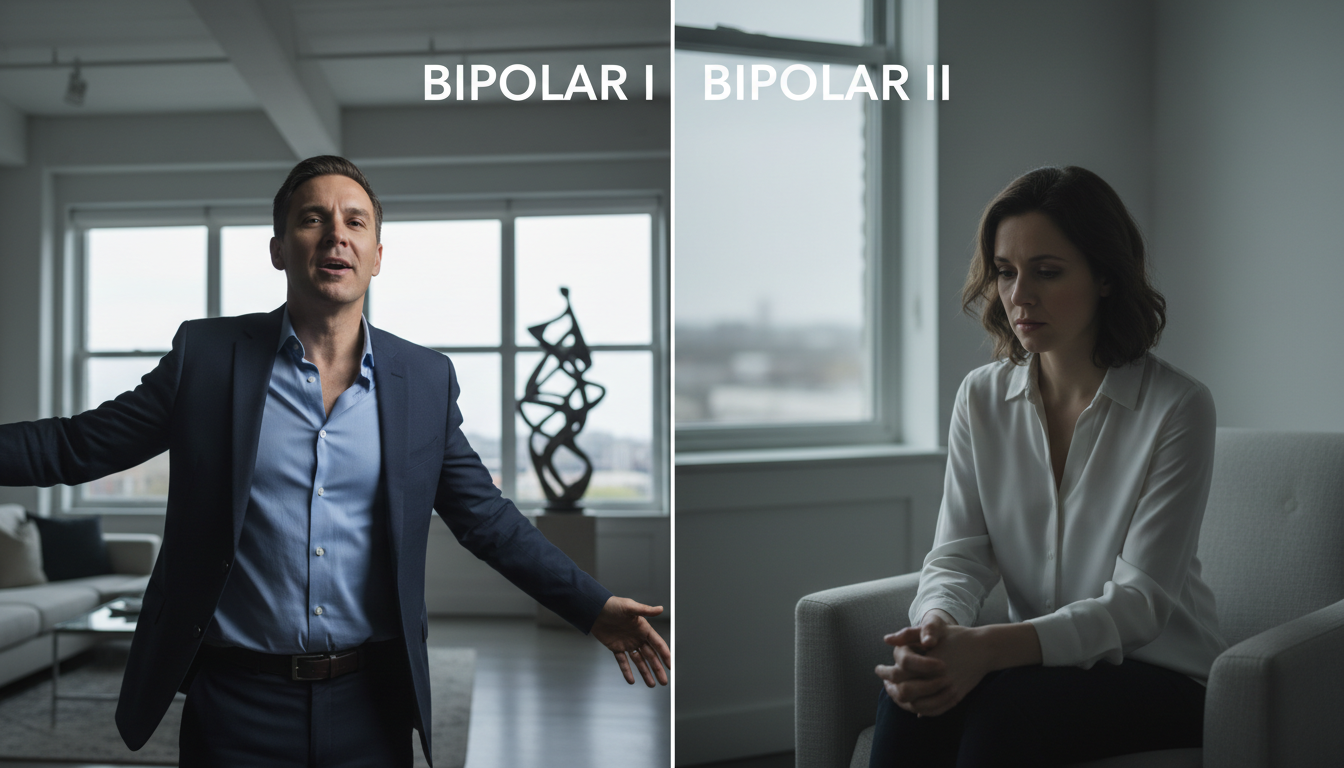
Bipolar I vs Bipolar II: Key Differences
Executive Summary
The clinical landscape of mood disorders is undergoing a profound transformation, driven by advances in genomic research, neuroimaging, and a deeper phenomenological understanding of the bipolar spectrum. Yet, for the individual navigating the healthcare system in Calgary, Alberta, the journey from symptom onset to accurate diagnosis remains fraught with challenges. This report serves as an exhaustive clinical monograph designed to elucidate the critical distinctions between Bipolar 1 and Bipolar 2 disorders, adhering strictly to the Diagnostic and Statistical Manual of Mental Disorders, Fifth Edition, Text Revision (DSM-5-TR) criteria while integrating cutting-edge findings from Ivy League research institutions including Harvard, Yale, and Columbia.
We explore the distinct neurobiological underpinnings of these conditions, challenging the antiquated notion that Bipolar 2 is merely a “milder” form of the disorder. Instead, we present evidence illustrating its unique burden, characterized by chronic depressive morbidity and elevated suicide risk. Furthermore, this document provides a granular analysis of the assessment landscape in Alberta, contrasting the public services offered by Alberta Health Services (AHS) with the specialized diagnostic capabilities of private practices such as CPC Clinics. By synthesizing data on genetic markers like AKAP11, the efficacy of Interpersonal and Social Rhythm Therapy (IPSRT), and the emerging field of digital phenotyping, this report aims to provide a definitive resource for patients, families, and professionals seeking clarity and stability.
1. The Clinical Landscape of Mood Disorders in Calgary
The prevalence of mood disorders in Western populations is significant, yet the precision of diagnosis lags behind our understanding of the pathology. In the context of Calgary, a city characterized by extreme seasonal variations in photoperiod—a known environmental trigger for circadian dysregulation—the management of bipolar spectrum disorders takes on a specific urgency.
1.1 The “Diagnostic Odyssey” and the Burden of Misdiagnosis
The path to a correct diagnosis for bipolar disorder is notoriously circuitous, often referred to in clinical literature as the “diagnostic odyssey.” Research indicates that the average delay between the onset of symptoms and the confirmation of a bipolar diagnosis ranges from 5 to 10 years.1 This gap is not merely an administrative failure; it is a period of immense vulnerability where patients are frequently treated for unipolar depression with antidepressant monotherapy—a practice that can inadvertently worsen the course of bipolar illness by inducing rapid cycling or manic switching.
A 2024 report from Harvard Medical School underscores that early differentiation is the single most significant predictor of long-term prognosis.3 The implications of this are profound for the Calgary demographic. In a healthcare system under strain, the nuance required to distinguish a hypomanic episode from a period of high productivity or anxiety is often lost in brief primary care consultations. Consequently, patients with Bipolar 2 are frequently misclassified as having Major Depressive Disorder (MDD) or “treatment-resistant” depression, leading to years of ineffective pharmacological interventions.
1.2 The Calgary Context: Environmental and Systemic Factors
Calgary presents a unique environmental milieu for individuals with mood vulnerability. The city’s latitude (51°N) results in short daylight hours in winter and extended daylight in summer. For individuals with bipolar disorder, who often possess a genetic vulnerability in their circadian clock genes (such as CLOCK and PER3), these seasonal shifts can act as potent destabilizers. The “winter blues” or Seasonal Affective Disorder (SAD) is common, but in the bipolar spectrum, the transition to the rapid increase of sunlight in spring can precipitate manic or hypomanic episodes.
Systemically, the province of Alberta operates a bifurcated mental health system. While acute psychiatric care is managed through Alberta Health Services (AHS) and hospitals like the Foothills Medical Centre, the longitudinal management of psychological health often falls to community providers. The distinct roles of psychiatrists (medical management) and registered psychologists (psychotherapy and assessment) create a landscape that requires savvy navigation. This report will later detail how private assessments, such as those offered by CPC Clinics, serve as a critical bridge in this system, offering the detailed diagnostics that short psychiatric consults may preclude.
2. The Neurobiological and Genetic Foundations of the Bipolar Spectrum
To understand the assessment process, one must first appreciate that bipolar disorder is not simply a psychological construct or a “mood swing.” It is a systemic biological condition rooted in specific genetic architectures and neuroanatomical anomalies.
2.1 Genetic Architecture: Beyond “Heritability”
Bipolar disorder is among the most heritable of medical conditions, with twin studies consistently estimating heritability between 60% and 80%.4 However, the “single gene” theory has been replaced by a polygenic model. The Psychiatric Genomics Consortium, involving researchers from the National Institute of Mental Health (NIMH), recently identified approximately twice as many genetic locations associated with bipolar disorder than previously known, confirming that the disorder results from the cumulative effect of thousands of small genetic variations.5
The AKAP11 Breakthrough
One of the most significant recent discoveries, published by scientists at Harvard Medical School and the Broad Institute, involves the gene AKAP11. This gene has been identified as a strong risk factor shared between bipolar disorder and schizophrenia.6 The clinical relevance of this discovery lies in its mechanism: the protein produced by AKAP11 interacts with GSK3B, a molecular signaling pathway that is the direct target of lithium.
This finding is transformative because it provides a biological rationale for the efficacy of lithium, a treatment used for over half a century. It suggests that for patients carrying AKAP11 variants, the disorder is fundamentally a disruption of this specific signaling pathway. This moves the field closer to “precision psychiatry,” where a genetic test might eventually predict who will respond to lithium versus who might need anticonvulsants like valproate.
The SKA2 Gene and Stress Regulation
Further research from Harvard and McLean Hospital has elucidated the role of the SKA2 gene. This gene regulates the glucocorticoid receptor, which is the brain’s primary tool for managing cortisol (the stress hormone). Variants in SKA2 have been linked to an inability to shut down the stress response, leading to sustained anxiety and, crucially, a higher risk of suicide.7 In the context of bipolar assessment, identifying a patient’s physiological response to stress is vital, as this genetic vulnerability explains why psychosocial stressors often precipitate the first manic or depressive episode.
2.2 Neuroanatomy: The Circuitry of Emotion
Neuroimaging studies from Yale School of Medicine and Brown University have moved beyond looking at the “chemical imbalance” theory to a “circuitry” model. Bipolar disorder is characterized by a functional disconnect between the limbic system (specifically the amygdala) and the prefrontal cortex (PFC).8
- The Amygdala: In bipolar patients, the amygdala—the brain’s threat detection and emotion center—is often hyperactive. It reacts to emotional stimuli with excessive intensity.
- The Prefrontal Cortex: In a neurotypical brain, the PFC exerts “top-down” control, inhibiting the amygdala’s impulses. In bipolar disorder, the PFC is often hypoactive or structurally thinner, leading to a failure of inhibition.
This structural reality explains the phenomenology of the disorder: the patient feels an intense emotion (amygdala) and lacks the neural “brakes” (PFC) to stop themselves from acting on it. This results in the impulsivity, risk-taking, and emotional lability seen in mania. Furthermore, Harvard research has linked specific brain features to transdiagnostic symptoms like anhedonia (inability to feel pleasure) and risk aversion, suggesting these neural signatures cut across traditional diagnostic boundaries.10
2.3 The Inflammatory Hypothesis
Emerging evidence from Columbia University suggests that bipolar disorder may also be an inflammatory condition. Patients often show elevated levels of inflammatory cytokines (such as IL-6 and TNF-alpha) during mood episodes, mirroring mechanisms seen in autoimmune diseases.11 This “whole-body” view of bipolar disorder helps explain the high rates of medical comorbidities, such as cardiovascular disease and diabetes, found in this population. It also opens new avenues for treatment, suggesting that anti-inflammatory lifestyle interventions (diet, exercise) are not just adjunctive but central to managing the biological core of the illness.
3. Bipolar 1 vs. Bipolar 2: Diagnostic Criteria and Phenomenology
The distinction between Bipolar 1 and Bipolar 2 is the most critical differential diagnosis in the mood disorder spectrum. It is a distinction often misunderstood by the public and even by general practitioners. It is not a distinction of severity—suicide rates are often higher in Bipolar 2—but a distinction of the intensity of the elevated mood state.
3.1 DSM-5-TR Criteria for Bipolar 1 Disorder
Bipolar 1 Disorder is the classic “manic-depressive” illness. The diagnostic sine qua non for Bipolar 1 is the occurrence of at least one Manic Episode. While most patients also experience major depression, depression is technically not required for the diagnosis; a single manic episode suffices.13
The Manic Episode Defined
A manic episode is a distinct period of abnormally and persistently elevated, expansive, or irritable mood and abnormally and persistently increased activity or energy.
- Duration: The episode must last at least one week and be present most of the day, nearly every day (or any duration if hospitalization is necessary).
- Functional Impairment: The mood disturbance must cause marked impairment in social or occupational functioning, or necessitate hospitalization to prevent harm to self or others, or include psychotic features.
- Symptom Cluster (3 required, 4 if mood is only irritable):
- Inflated Self-Esteem or Grandiosity: Believing one has special powers, wealth, or a divine mission.
- Decreased Need for Sleep: Feeling fully rested after only 2-3 hours of sleep (distinct from insomnia, where one wants to sleep but cannot).
- Pressured Speech: Talking rapidly, loudly, and difficult to interrupt.
- Flight of Ideas: Racing thoughts or rapidly shifting topics.
- Distractibility: Attention drawn to irrelevant external stimuli.
- Psychomotor Agitation: Purposeless non-goal-directed activity (pacing) or increase in goal-directed activity.
- Risk-Taking: Excessive involvement in activities with high potential for painful consequences (e.g., buying sprees, sexual indiscretions).13
3.2 DSM-5-TR Criteria for Bipolar 2 Disorder
Bipolar 2 Disorder is characterized by a clinical course of recurring mood episodes consisting of one or more Major Depressive Episodes and at least one Hypomanic Episode. The crucial diagnostic rule is that there has never been a Manic Episode. If a patient experiences a full manic episode even once, the diagnosis is upgraded to Bipolar 1.14
The Hypomanic Episode Defined
Hypomania shares the same symptom list as mania but differs in duration and severity.
- Duration: The episode must last at least 4 consecutive days.
- Functional Impairment: The episode is associated with an unequivocal change in functioning that is uncharacteristic of the individual. However, it is not severe enough to cause marked impairment in social or occupational functioning or to necessitate hospitalization.
- Psychosis: By definition, if psychotic features (hallucinations/delusions) are present, the episode is Manic (Bipolar 1), regardless of duration.17
3.3 Comparative Analysis: The Clinical Nuance
Feature | Bipolar 1 Disorder | Bipolar 2 Disorder | Clinical Implication |
Primary “Up” State | Mania | Hypomania | Bipolar 1 up-states are dangerous/visible; Bipolar 2 up-states are often missed or enjoyed. |
Minimum Duration | 7 Days (or hospitalization) | 4 Days | Short-duration hypomania is often dismissed as “having a good week.” |
Psychosis | Possible (up to 50% of cases) | Never | Psychosis in BP1 often leads to misdiagnosis of Schizophrenia. |
Hospitalization | Common during Mania | Rare for Hypomania | BP2 patients are usually hospitalized for depression, not hypomania. |
Depressive Burden | Severe, but variable | Chronic and Severe | BP2 patients spend significantly more time depressed than BP1 patients. |
Suicide Risk | High (often during mixed states) | High (often due to chronicity) | BP2 has higher rates of suicide attempts in some datasets due to lethal lethargy. |
3.4 The Phenomenology of the “Highs”
To assess these conditions accurately, clinicians must understand the lived experience, or phenomenology, of the patient.
The Manic Experience (BP1):
This is often described as an “electrical storm.” It may begin with euphoria but rapidly devolves into dysphoria and terror. The grandiosity is not just confidence; it is delusional. A patient might believe they have solved the unified field theory or have been chosen by God. The risk-taking is catastrophic—emptying bank accounts, destroying marriages, or driving recklessly. The loss of insight (anosognosia) is profound; the patient genuinely believes they are well and that everyone else is slowing them down.
The Hypomanic Experience (BP2):
Hypomania is often seductive. It can feel like the “best version” of oneself. The individual is witty, charming, highly productive, and requires little sleep. In a corporate environment like downtown Calgary, a hypomanic employee might be the top performer for a week—closing deals, writing reports all night—before crashing. Because it is ego-syntonic (compatible with one’s self-image), patients rarely complain about hypomania. They complain about the depression that follows. This makes the retrospective assessment of hypomania the most challenging aspect of Bipolar 2 diagnosis.
4. The Depressive Phase: A Unique Clinical Entity
While mania and hypomania define the diagnosis, depression is the state in which most patients live. However, “Bipolar Depression” is neurobiologically and clinically distinct from “Unipolar Depression” (Major Depressive Disorder). Understanding this distinction is vital for assessment in Calgary, where the default diagnosis is often MDD.
4.1 Bipolar vs. Unipolar Depression
Clinicians at CPC Clinics and specialized AHS programs look for specific “atypical” features that signal bipolarity even when the patient presents with depression:
- Hypersomnia: Unlike the insomnia of unipolar depression (waking up early and unable to return to sleep), bipolar depression is often characterized by sleeping 12-14 hours a day.
- Leaden Paralysis: A physical sensation of heaviness in the limbs, making it difficult to move.
- Psychomotor Retardation: A visible slowing down of thought and physical movement.
- Early Onset: Bipolar depression often begins in adolescence (teens to early 20s), whereas unipolar depression has a later average onset.
- Postpartum Onset: A first depressive episode occurring immediately postpartum is a high-risk marker for bipolar diathesis.
4.2 The Risk of Suicide and Mixed States
The most dangerous phase of bipolar disorder is not necessarily the depths of depression, but the “Mixed State” or “Mixed Features” episode. This occurs when a patient experiences manic energy and agitation simultaneously with depressive mood and suicidal ideation. In a pure depressive state, a patient may be too lethargic to enact a suicide plan. In a mixed state, they have the despair of depression combined with the energy and impulsivity of mania to carry it out.18
Research from Columbia University indicates that suicide risk after hospital discharge is significantly high for patients with mood disorders, particularly those with depression and bipolar disorder.20 This period—the weeks following discharge—is a critical window for intervention. The “activation” caused by starting an antidepressant can sometimes induce this mixed state before the mood improves, which is why close monitoring by a psychologist or psychiatrist is mandatory during medication initiation.
5. Differential Diagnosis: The "Great Imitators"
A comprehensive assessment must rigorously rule out other conditions that mimic bipolar symptoms. The two most common confounders in adults are Attention-Deficit/Hyperactivity Disorder (ADHD) and Borderline Personality Disorder (BPD).
5.1 Bipolar Disorder vs. Adult ADHD
Both conditions share symptoms of distractibility, impulsivity, talkativeness, and physical restlessness. It is also possible to have both (comorbidity).
- Episodic vs. Chronic: The key differentiator is the course of the symptoms. ADHD symptoms are chronic and pervasive; they exist every day, from childhood, regardless of mood. Bipolar symptoms are episodic; they appear or worsen drastically during a mood episode and may disappear during euthymia (periods of stability).
- Sleep Patterns: An individual with ADHD may have trouble falling asleep due to a racing mind but usually wants to sleep and feels tired the next day. An individual in a manic state has a decreased need for sleep—they may sleep 2 hours and wake up feeling energized and refreshed.21
- Age of Onset: ADHD is a neurodevelopmental disorder present from childhood. Bipolar disorder typically emerges in late adolescence or early adulthood.
5.2 Bipolar Disorder vs. Borderline Personality Disorder (BPD)
This is perhaps the most difficult differential diagnosis, as both involve “mood swings” and impulsivity.
- Trigger Sensitivity: Mood shifts in BPD are almost always triggered by interpersonal stressors (e.g., perceived rejection, a fight with a partner) and can shift within minutes or hours. Bipolar mood shifts are often autonomous (not triggered by external events) and sustain for days or weeks.
- Self-Image: BPD is characterized by a chronically unstable self-image and feelings of emptiness. Bipolar patients usually have a stable sense of self between episodes.
- Duration of Dysregulation: Research from Yale utilizing fMRI has shown that emotional dysregulation in BPD is a trait (a constant vulnerability), whereas in Bipolar Disorder, it is a state (tied to the episode).22
- Assessment Tools: At CPC Clinics, specific personality assessments (like the PAI or MMPI-3) are used to detect the specific patterns of BPD, such as fear of abandonment and identity disturbance, which are absent in pure Bipolar Disorder.
6. The Assessment Process in Alberta: From Referral to Report
In Calgary, obtaining a formal diagnosis involves navigating a specific regulatory and clinical pathway. Understanding the difference between the public and private sectors, and the roles of different professionals, is essential.
6.1 The Role of Professionals: Psychologist vs. Psychiatrist
In Alberta, both Registered Psychologists and Psychiatrists play crucial roles, but they are distinct.
- Psychiatrists (MD): Medical doctors who specialize in mental health. They can diagnose and, crucially, prescribe medication. Access is usually through referral from a family doctor to AHS, and wait times can be long.
- Registered Psychologists (R.Psych): Regulated by the College of Registered Psychologists of Alberta (CAP). They are authorized to diagnose mental disorders through the Health Professions Act. They cannot prescribe medication, but they perform the deep-dive psychological testing (psychometrics) that psychiatrists often do not have time for. Their reports are used by family doctors or psychiatrists to justify medication prescriptions.24
6.2 The Assessment Battery
A “gold standard” assessment for bipolar disorder in Calgary, such as those performed at CPC Clinics, is a multi-stage process.
Stage 1: The Structured Clinical Interview
Clinicians use tools like the Structured Clinical Interview for DSM-5 (SCID). This is not a free-form chat; it is a rigorous algorithm of questions designed to map the patient’s lifetime history of mood.
- The “Rule of Three”: Clinicians often look for three distinct phases: a clear baseline, a clear depression, and a clear deviation “up” (hypomania/mania).
- Collateral Interviews: Because insight is often impaired during hypomania, clinicians may request to speak to a partner or parent. A spouse often remembers the “week you bought the boat” or “the week you didn’t sleep” far better than the patient.
Stage 2: Psychometric Testing
Standardized tests provide objective data to support clinical judgment.
- Mood Disorder Questionnaire (MDQ): A screening tool specifically for bipolar traits.
- Young Mania Rating Scale (YMRS): A clinician-administered scale to quantify the severity of manic symptoms.26
- MMPI-3 (Minnesota Multiphasic Personality Inventory): A massive 300+ question test that assesses personality structure and psychopathology. It contains “validity scales” that can detect if a patient is minimizing or exaggerating symptoms, ensuring the diagnosis is robust.
6.3 Regulatory Standards in Alberta
The College of Registered Psychologists of Alberta (CAP) mandates strict ethical guidelines for assessment.24 An assessment report must clearly distinguish between subjective report (what the patient says) and objective data (what the tests say). This high standard ensures that a diagnosis from a Calgary psychologist carries weight with insurance companies, employers, and other medical professionals.
7. Treatment Paradigms: The Three-Legged Stool
Once a diagnosis of Bipolar 1 or 2 is confirmed, treatment must begin immediately. Effective management is often described as a “three-legged stool”: Pharmacotherapy, Psychotherapy, and Lifestyle Management.
7.1 Pharmacotherapy: The Biological Foundation
While this report does not constitute medical advice, understanding the classes of medication is helpful for the patient dialogue.
- Mood Stabilizers: Lithium remains the benchmark, particularly for Bipolar 1 and suicide prevention. The discovery of the AKAP11 gene reinforces its relevance. It has unique neuroprotective properties, literally preserving gray matter volume in the brain.
- Anticonvulsants: Valproate (Depakote) and Lamotrigine (Lamictal) are staples. Lamotrigine is often the first choice for Bipolar 2 because it is highly effective at lifting bipolar depression without triggering mania (unlike SSRIs).
- Atypical Antipsychotics: Medications like Quetiapine (Seroquel), Lurasidone (Latuda), and Aripiprazole (Abilify) are used for acute mania and increasingly for bipolar depression maintenance.
The Antidepressant Controversy: As noted in Section 1.1, treating bipolar disorder with antidepressants alone is dangerous. They should typically only be used in combination with a mood stabilizer to prevent manic switching.27
7.2 Evidence-Based Psychotherapies
Medication stabilizes the chemistry; therapy manages the life.
- Interpersonal and Social Rhythm Therapy (IPSRT): Developed specifically for bipolar disorder, this therapy focuses on the “social zeitgebers” (time-givers)—people, work, and routines that set our biological clock. By rigidly structuring sleep, meal times, and social interactions, IPSRT prevents the circadian disruptions that trigger episodes. Research confirms its high efficacy in preventing relapse.28
- CBT-I for Bipolar Disorder: Cognitive Behavioral Therapy for Insomnia is adapted for bipolar patients to treat sleep issues without inducing sleep deprivation (which causes mania). It focuses on “dark therapy” (reducing blue light) and stimulus control.30
- Family-Focused Therapy (FFT): This involves the patient’s family in identifying prodromal (early warning) signs of an episode, creating a “safety plan” before the crisis hits.
7.3 Emerging Treatments
- Ketamine: Research from Yale and Columbia has shown that Ketamine infusions can rapidly reduce suicidal ideation in treatment-resistant bipolar depression.31 Unlike traditional antidepressants that take weeks, Ketamine works in hours, offering a critical tool for acute crisis management.
- TMS (Transcranial Magnetic Stimulation): Johns Hopkins researchers are piloting novel forms of TMS (theta-burst stimulation) for Bipolar 1 depression, offering a non-invasive option for those who do not respond to medication.33
8. Innovation and Future Directions: Digital Phenotyping and Precision Medicine
The future of bipolar assessment in Calgary is moving out of the clinic and onto the wrist.
8.1 Digital Phenotyping
Current assessment relies on retrospective memory (“How did you feel last week?”), which is notoriously unreliable. New research from Harvard using “digital phenotyping” utilizes smartphone and wearable data (like Fitbit) to track objective markers: sleep duration, GPS movement (wandering/pacing), and typing speed (pressured communication). Machine learning algorithms can predict a mood episode days before the patient realizes it.34 While not yet standard clinical practice in Calgary, discussing these tracking methods with a psychologist can help patients set up their own monitoring systems.
8.2 Genetic Screening
While we cannot yet diagnose bipolar disorder with a blood test, the identification of polygenic risk scores and specific markers like AKAP11 suggests a future where treatment is personalized. Patients with a family history may soon be able to assess their genetic risk profile to make informed decisions about early intervention and lifestyle protection.6
9. Navigating Resources in Calgary: A Practical Guide
For the resident of Calgary suspecting Bipolar 1 or 2, there are distinct pathways to care.
9.1 Public Pathway: Alberta Health Services (AHS)
- Access Mental Health (403-943-1500): This is the single point of entry. A telephone intake nurse conducts a screening and routes the patient to the appropriate clinic.37
- Mood Disorders Program (Foothills Medical Centre): A specialized tertiary care clinic for moderate-to-severe Bipolar Disorder. It offers multidisciplinary care (psychiatry, nursing, OT).
- Pros/Cons: The service is free (covered by AHCIP), but wait times can be significant, and acceptance often requires a referral from a family physician with specific criteria (e.g., failure of previous treatments).
9.2 Private Pathway: CPC Clinics and Private Psychology
For those requiring immediate assessment or a more comprehensive diagnostic report than the public system can provide, private practice is the alternative.
- CPC Clinics: Located in Calgary, CPC Clinics specializes in comprehensive psychological assessments. Their protocol includes the full battery of tests (personality, mood, cognitive) to differentiate Bipolar Disorder from complex comorbidities like ADHD and BPD.39
- Process: A patient can self-refer (no doctor’s note needed). The resulting report is a legal medical document that can be taken to a family physician to advocate for a psychiatry referral or medication trial.
- Bipolar I & II Counselling: Beyond assessment, CPC Clinics offers specialized therapy focused on the specific challenges of the bipolar spectrum, likely integrating principles of CBT and rhythm maintenance.
9.3 Crisis Resources
If safety is at risk (suicidal ideation or severe mania):
- Distress Centre Calgary: 403-266-HELP (4357)
- Community Resource Team (CRT): A mobile response team for urgent mental health assessments in the community.
- Emergency Departments: Foothills Medical Centre and South Health Campus have specialized psychiatric emergency intake.
10. Conclusion: Clarity is the First Step Toward Stability
Bipolar Disorder, whether Type 1 or Type 2, is a formidable adversary, but it is a treatable one. The “rollercoaster” of untreated illness—the lost jobs, the strained relationships, the terrifying highs and the crushing lows—is often fueled by a lack of understanding and a lack of diagnosis.
In Calgary, the tools for stability exist. From the neurobiological insights of lithium responsiveness to the structured rhythm therapies of IPSRT, the path to wellness is paved with evidence. The critical first step is accurate assessment: distinguishing the hypomania of Bipolar 2 from the “good mood” of recovery, and separating the agitation of mixed states from simple anxiety.
If the patterns described in this report resonate with your experience or that of a loved one, do not accept ambiguity. Seek the clarity of a formal assessment.
(https://cpcclinics.ca/contact-us) to discuss a comprehensive psychological assessment. With the right diagnosis, the rollercoaster can stop, and a stable, fulfilling life can begin.