The Top 5 Mental Skills of Elite Athletes
A Guide to Cultivating a Peak Performance Mindset with Mental Skills Training

The 90% Mental Game

In the world of elite sports, physical prowess is the price of admission. Every athlete at the top level is strong, fast, and technically skilled. So, what separates the champions from the contenders? The answer is almost always found in the space between the ears. It’s the reason tennis legend Serena Williams’ father taught her that the game is 70% mental.
This is where mental skills training comes in — the systematic, evidence-based process that transforms an athlete’s potential into consistent, high-level performance. This guide is for the Calgary athlete pushing their limits on the slopes of WinSport, the coach shaping the next generation of talent, and the sports enthusiast who understands that the true battle is won in the mind.
This is not about fixing a weakness; it’s about forging a weapon. The goal is to cultivate a peak performance mindset — a state of optimal functioning where your actions, thoughts, and goals are perfectly aligned to deliver your best when it matters most.
We will deconstruct the five foundational mental skills that define the world’s greatest athletes: goal-setting, visualization, self-talk, focus, and emotional regulation. Get ready to learn the strategies that can elevate your game from the fields of Calgary to the world stage.
What is Mental Skills Training and Why It's the Ultimate Game-Changer
Mental Skills Training (MST), also known as psychological skills training, is a structured approach to developing the psychological capabilities essential for peak performance. Think of it as a strength and conditioning program for your brain. It involves learning and practicing specific mental techniques (like deep breathing or cognitive reframing) to build foundational mental skills (like focus and confidence), which in turn cultivate enduring positive qualities like resilience and self-worth.
Enhanced Confidence
Building an unshakeable belief in your abilities.
Superior Stress Management
Learning to perform optimally under pressure.
Ironclad Resilience
Developing the capacity to bounce back from setbacks and adversity.
Improved Well-Being
Fostering mental health and life skills that support you in and out of sport.
The connection between physical activity and mental health is well-established. A landmark study found that those who exercise regularly report having 1.5 fewer days of poor mental health per month. Yet, physical training alone isn’t a panacea.
A 2018 study published in Frontiers in Psychology, involving researchers from Harvard-affiliated McLean Hospital, revealed that nearly half of elite athletes—45%—reported symptoms of depression. This highlights a critical gap: even the most physically fit athletes need dedicated mental training.
This is where Mental Skills Training (MST) becomes the ultimate game-changer. It creates a powerful positive feedback loop — stronger mental skills lead to more effective physical training, which boosts performance, leading to a more positive mental state. A 2025 review in Sports Psychiatry from a Dartmouth-affiliated research team argues that framing mental health support as performance optimization is key to reducing stigma and encouraging early engagement. Mental skills training is precisely that — the proactive, performance-focused approach that every serious Calgary athlete needs to unlock their full potential.
Elite Goal-Setting: The Architectural Blueprint for Success
Effective goal setting is the foundation of a peak performance mindset. It provides direction, sustains motivation, and allows for the measurement of progress. Elite athletes don’t just have vague ambitions; they build a detailed architectural blueprint for success using a three-tiered system.
The Three Types of Goals
Understanding the difference between outcome, performance, and process goals is fundamental for any athlete serious about goal-setting.
Outcome Goals
These focus on the final result of an event, like winning a championship or defeating a specific opponent. They are powerful motivators but are often outside of an athlete’s direct control.
Performance Goals
These are based on achieving a personal standard, independent of others, such as running a personal best time or achieving a specific statistic. They offer more control than outcome goals.
Process Goals
These are the most crucial and controllable goals. They focus on the specific actions and techniques an athlete must execute during performance to be successful, like maintaining a specific form during a lift or using a pre-shot routine.
Elite athletes anchor their daily focus on process goals. Why? Because mastering the process is the only reliable path to achieving desired performance and outcome goals. This focus on controllable actions builds a robust, internal sense of confidence that isn’t dependent on the scoreboard.
A 2023 systematic review of goal-setting research confirms that focusing on the process is a highly effective method for behavioral change and performance enhancement in sport.
The SMART Framework
To be effective, goals must be structured. The SMART framework is the gold standard used by top performers:
Specific: Clearly define what you want to accomplish.
Measurable: Include quantifiable metrics to track progress.
Attainable: Ensure the goal is challenging yet realistic.
Relevant: The goal must align with your broader objectives.
Time-bound: Set a clear deadline to create urgency and focus.
The power of breaking down large objectives is supported by compelling research. A 2024 study led by the University of Pennsylvania’s Angela Duckworth found that reframing an overarching goal into more granular, weekly subgoals increased hours volunteered by 8% over a 12-week period. This demonstrates that a disciplined focus on smaller, process-oriented steps significantly improves the likelihood of achieving a larger outcome. Furthermore, a 2018 review involving Cornell-affiliated researchers highlighted that goals driven by autonomous motivation—those pursued for personal value or enjoyment—lead to greater effort and psychological well-being.
"Effective goal setting provides an athlete with specific measurable aims. It keeps them motivated and allows optimal, consistent and confident performance to be achieved."
Visualization and Mental Rehearsal: Winning in Your Mind First

Visualization, or mental imagery, is one of the most powerful tools in an athlete’s mental arsenal. It is far more than just positive thinking — it is a deliberate and structured mental practice.
When you vividly imagine yourself executing a skill, you activate the same neural pathways in your brain that fire during actual physical performance. This mental rehearsal strengthens muscle memory, enhances motor skills, and conditions your brain for success before you ever step onto the field, court, or ice.
A Multi-Sensory Experience
The most effective visualization is not just a movie you watch in your head—it’s an immersive experience. Elite athletes engage all their senses to make the mental simulation as realistic as possible:
Sight: See the environment, your teammates, the ball, the target.
Sound: Hear the crowd, the sound of your skates on the ice, the crack of the bat.
Touch: Feel the texture of the ball, the grip on your stick, the ground beneath your feet.
Smell & Taste: Recall the smell of the gym or freshly cut grass, the taste of salt from your effort.
Kinesthetic Feeling: Feel the muscles contract, the smooth execution of the movement, the balance and coordination in your body.
A 2020 study published in the Discobolul Journal found that comprehensive visualization techniques can improve motor skills, increase muscle strength, boost self-confidence, and decrease anxiety. Moreover, a 2022 review confirmed that athletes competing at higher levels are more likely to effectively employ these mental rehearsal techniques.
How to Practice Visualization
Visualization Practice Guide
Find a Quiet Space: Begin in a calm environment where you won’t be interrupted.
Relax: Take several deep, slow breaths to calm your mind and body.
Set the Scene: Vividly imagine your performance environment in rich detail.
Execute Perfectly: Mentally rehearse the skill or performance exactly as you want it to unfold.
Rehearse Resilience: Visualize overcoming a challenge and recovering with composure.
Incorporate Emotion: Feel the confidence, focus, and joy of a successful performance.
Repeat Consistently: Like any skill, visualization improves with consistent practice.
A 2025 study in Frontiers in Psychology underscores the vital role of imagery in helping athletes manage the intense emotions and stress of competition. For athletes in Calgary looking to master this skill, guided visualization sessions can be truly transformative, enhancing both mental control and competitive readiness.
Positive Self-Talk: Commanding Your Inner Dialogue
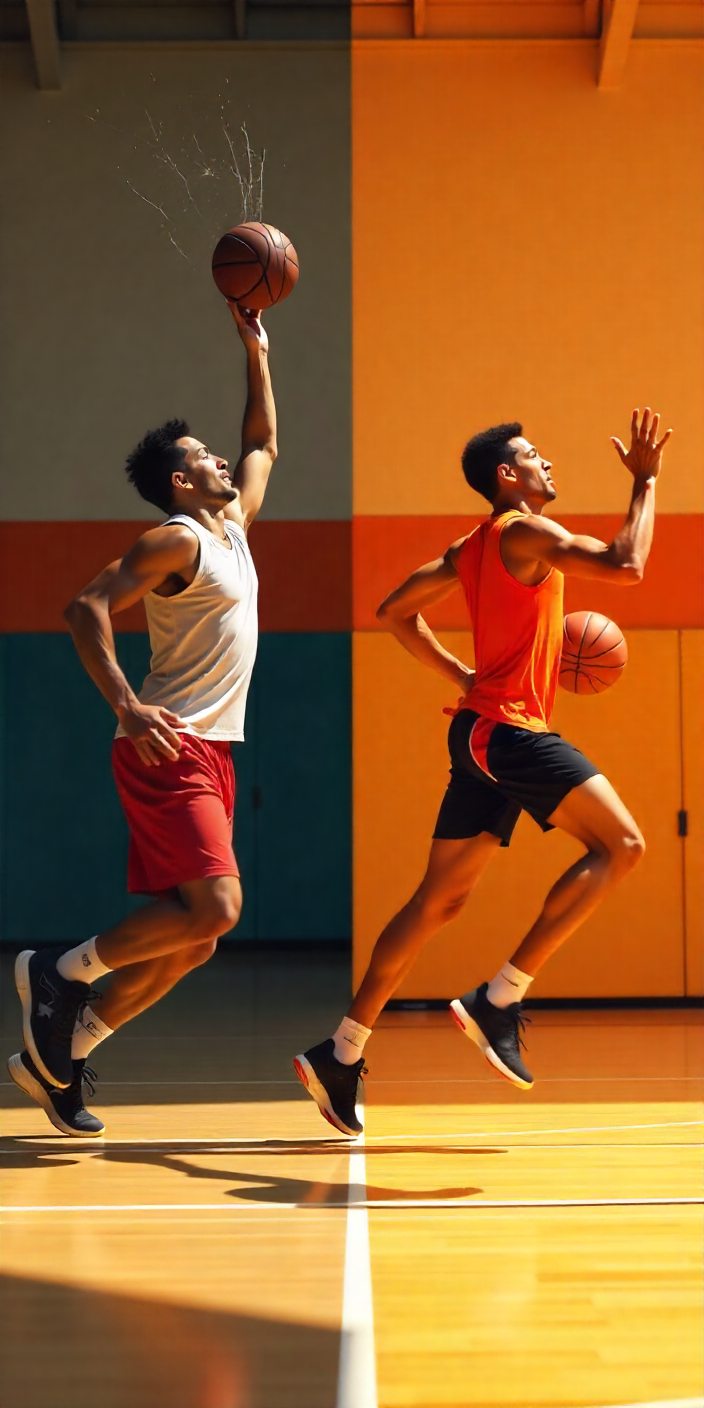
The voice in your head is your most constant companion. For an athlete, that inner dialogue can be their greatest asset or their worst enemy. Positive self-talk is the skill of consciously directing that internal conversation to enhance confidence, maintain focus, and regulate emotions.
Instructional vs. Motivational Self-Talk
Effective self-talk generally falls into two categories, each serving a distinct purpose:
Instructional Self-Talk
This involves using specific, technical cues to guide your actions. It’s about focusing on the “how-to” of performance. Examples include a basketball player thinking “high elbow, follow through” at the free-throw line or a sprinter using the cue “explode” at the start of a race.
Motivational Self-Talk
This is used to increase effort, build confidence, and manage energy levels. Phrases like “You’ve got this,” “Push through,” or “Let’s go!” help an athlete stay positive and persistent, especially during moments of fatigue or adversity.
A groundbreaking 2011 meta-analysis published in Perspectives on Psychological Science reviewed 32 studies and found that self-talk has a moderate positive effect on sports performance (effect size = .48). Crucially, the study revealed that the type of self-talk matters: instructional self-talk proved more effective for tasks requiring fine motor skills and precision (like golf or archery), while motivational self-talk was more beneficial for activities demanding strength and endurance (like weightlifting or running).
Techniques to Master Your Inner Voice
Awareness through Logging: The first step is to become aware of your current self-talk patterns. Keep a training journal and note the thoughts that arise during practice and competition.
Thought Stopping: When you catch a negative thought, use a powerful cue word like “Stop!” or “Reset!” to interrupt the pattern.
Reframing: Actively challenge and change negative thoughts into positive or instructional ones. Transform “Don’t mess this up” into “Focus and execute.”
A 2020 study focusing on shooting athletes found a significant positive correlation between self-talk and intrinsic motivation. Further research shows that addressing yourself in the second person (“You can do this”) or by your own name can create psychological distance, allowing for more objective and effective self-coaching.
Unshakeable Focus: Concentration Techniques of Champions

Concentration is the ability to direct and maintain attention on the task at hand while ignoring irrelevant distractions. In the chaotic environment of competition, the ability to control your focus is paramount. Experts in sports psychology teach athletes to understand and master the different dimensions of their attention.
The Four Styles of Attentional Focus
According to Nideffer’s influential model, attention varies along two dimensions: width (broad to narrow) and direction (internal to external). This creates four distinct focus styles that elite athletes shift between seamlessly:
Broad-External
Used to assess a situation by looking at many external factors. (e.g., A point guard scanning the entire court to find an open teammate).
Narrow-External
Used to focus on one or two external cues. (e.g., A golfer focusing solely on the ball before a putt).
Broad-Internal
Used to analyze and plan. (e.g., A coach developing a game plan or an athlete reviewing strategy before a play).
Narrow-Internal
Used to mentally rehearse a skill or monitor one’s own physical state. (e.g., A diver mentally rehearsing their sequence).
The External Focus Advantage
While all four styles have their place, a significant body of research points to one as being superior for in-the-moment performance: a narrow-external focus. The Constrained Action Hypothesis suggests that focusing internally on your own body movements can disrupt the brain’s automatic control processes, leading to rigid, inefficient performance. In contrast, focusing externally on the intended effect of your movement allows the motor system to operate more naturally and effectively.
Drills to Sharpen Your Concentration
Mindfulness Grounding: Anchor your attention in the present by focusing on your senses. Before a play, take a second to feel your feet on the ground, hear the sounds of the game, and see the details of your surroundings.
Purposeful Breathing: Use controlled breathing techniques to calm your nervous system and reset your focus. Box Breathing is a simple method: inhale for 4 seconds, hold for 4, exhale for 4, and hold for 4.
Concentration Grids: This classic drill involves finding and marking numbers in sequential order on a grid as quickly as possible. Regular practice can measurably improve your ability to maintain focus under pressure.
Emotional Regulation and Resilience: The Art of the Comeback

Elite competition is an emotional rollercoaster. The ability to manage emotions—both positive and negative—is what allows an athlete to stay composed under pressure and bounce back from adversity. Emotional regulation is not about suppressing feelings; it’s about understanding them and choosing a constructive response.
Respond, Don't React
The core of emotional regulation is creating a space between an emotional trigger and your reaction. A bad call, a personal mistake, or a taunt from an opponent can trigger a flash of anger or frustration. The untrained athlete reacts impulsively, often making the situation worse. The mentally skilled athlete, however, uses that small pause to take a deep breath, acknowledge the emotion without judgment, and choose a response that serves their performance. They learn to “dial down” the emotional volume rather than trying to turn it off completely.
The Science of Bouncing Back
The world’s leading expert on resilience, Dr. George A. Bonanno of Columbia University, has shown that the key to resilience is regulatory flexibility. In a 2023 paper in Nature Reviews Psychology, he explains that resilient individuals possess a diverse toolkit of coping strategies and the self-awareness to use the right one in a given situation. This is supported by a 2024 systematic review showing that cognitive reappraisal—changing how you think about a situation—is a highly effective strategy, while emotional suppression is often counterproductive.
The work of Angela Duckworth at the University of Pennsylvania on grit—defined as passion and perseverance for long-term goals—is central to this discussion. Grit fuels resilience, driving athletes to persist through the inevitable challenges of a long season or career. Managing external emotional triggers is also crucial; a 2018 University of Pennsylvania study found that limiting social media use to 30 minutes per day significantly reduced feelings of depression and loneliness—an important strategy for modern athletes.
The Mental Playbook: Routines of Legendary Athletes
Theory is one thing; application is another. Let’s look at how two of the greatest athletes of all time integrate these mental skills into their daily routines.
LeBron James: The Mind of a King
LeBron James’s longevity at the absolute peak of the NBA is a testament to his physical gifts, but his mental discipline is what truly sets him apart. He defines mental fitness as the combination of presence, awareness, and calm.
Holistic Recovery: For LeBron, mental training is a 24/7 commitment. He famously prioritizes sleep as his number one recovery tool, understanding that mental and physical restoration are intertwined.
Absolute Focus: He uses a “blinders” analogy, like those on a racehorse, to describe his ability to tune out distractions and focus solely on his goal in high-pressure moments.
Breath as an Anchor: He views his breath as the “power source for his concentration.” He uses deep, controlled breathing to tell his mind and body that everything is under control, even amidst chaos.
Serena Williams: The Unbreakable Will
Serena Williams believes mental toughness is a muscle that must be trained relentlessly. Her dominance is built on an unshakeable will forged through deliberate practice.
“70% Mental”: Taught by her father Richard, this philosophy is the core of her approach. She believes she won most of her Grand Slams “upstairs,” with her mind, not just her physical talent.
Practicing Adversity: Serena doesn’t just visualize success; she creates adversity in practice. She will intentionally play points pretending she is down 15-30 or facing a break point.
Reframing for Fuel: In a famous example from the 2010 Australian Open final, an opponent’s fan yelled something negative. Instead of getting rattled, Serena used their negativity as fuel.
The common thread is that for these legends, mental skills are not an afterthought—they are a deeply integrated, daily system that drives their physical performance.
Putting It Into Practice: Your Mental Skills Implementation Plan
Knowledge is only potential power — action is where transformation happens. Integrating these five skills into your routine doesn’t require hours each day; it requires consistency. Start by dedicating 5–10 minutes daily to one or two of these exercises.
The key is to weave this mental work into your physical training. Use your warm-up to practice purposeful breathing. Visualize your race route while on the stationary bike. Use instructional self-talk during your lifts. The more you integrate these skills into your regular training, the more automatic and effective they become.
Use the table below as your starter kit. Pick one drill each day and commit to it.
Mental Skill | 5-Minute Daily Drill | Key Benefit |
Goal-Setting | Write down one specific process goal for today’s training session (e.g., “Focus on keeping my head still during every swim stroke”). | Builds controllable confidence and directs focus. |
Visualization | Before training, close your eyes for 2 minutes and mentally rehearse one skill or play, seeing and feeling it executed perfectly. | Primes the brain’s neural pathways for success. |
Positive Self-Talk | Identify one recurring negative thought. Write down a positive, instructional phrase to replace it with (e.g., “I’m tired” becomes “Push through, finish strong”). | Commands your inner dialogue and boosts motivation. |
Focus | Practice one minute of box breathing (4-second inhale, 4-second hold, 4-second exhale, 4-second hold) to center your attention. | Calms the nervous system and sharpens present-moment awareness. |
Emotional Regulation | At the end of the day, name one strong emotion you felt (e.g., frustration, excitement) without judgment. Acknowledge it and let it go. | Develops self-awareness and emotional control. |
Mental Game
5-Minute Daily Drill
Key Benefit
Goal-Setting
Write down one specific process goal for today's training session (e.g., "Focus on keeping my head still during every swim stroke").
Builds controllable confidence and directs focus.
Visualization
Before training, close your eyes for 2 minutes and mentally rehearse one skill or play, seeing and feeling it executed perfectly.
Primes the brain's neural pathways for success.
Positive Self-Talk
Identify one recurring negative thought. Write down a positive, instructional phrase to replace it with (e.g., "I'm tired" becomes "Push through, finish strong").
Commands your inner dialogue and boosts motivation.
Focus
Practice one minute of box breathing (4-second inhale, 4-second hold, 4-second exhale, 4-second hold) to center your attention.
Calms the nervous system and sharpens present-moment awareness.
Emotional Regulation
At the end of the day, name one strong emotion you felt (e.g., frustration, excitement) without judgment. Acknowledge it and let it go.
Develops self-awareness and emotional control.
Your Calgary Advantage: Sports Psychology and Mental Performance Resources
Calgary is a city built on high performance. With world-class facilities like WinSport and a vibrant athletic community, the drive to excel is everywhere. To gain the ultimate competitive edge, Calgary athletes have access to exceptional local resources for mental skills and performance training.
While there are several strong options — including the Sport Medicine Centre at the University of Calgary and other specialized coaching services — it’s crucial to find a team that provides a comprehensive, evidence-based, and personalized approach to athlete development.

Spotlight on CPC Clinics Calgary
CPC Clinics (Canadian Psychological & Counselling Clinics) stands out as a premier destination for athletes seeking to master their mental game. Their approach is rooted in compassionate, evidence-based care designed to help athletes turn struggles into strengths and unlock their full potential. The team includes Registered Psychologists with Master’s and Doctorate-level degrees, registered with esteemed organizations such as the College of Alberta Psychologists (CAP) and the Psychologists’ Association of Alberta (PAA).
CPC Clinics offers a suite of services tailored to the needs of the modern athlete. Their experts provide one-on-one sport psychology consultations and ongoing mental performance coaching to strengthen the very skills covered in this guide—from managing performance anxiety to building unshakeable confidence. They also offer specialized visualization workshops, giving athletes guided, expert instruction in mental rehearsal. Clinicians like Marggie Marks, who is also an NCCP Certified Coach, bring a rare combination of clinical expertise and real-world athletic experience, helping athletes transform challenges into forward momentum.
Located conveniently near Chinook Centre, CPC Clinics provides a supportive and professional environment where Calgary athletes can build a true partnership in their journey toward peak performance. Their mission is to nurture each athlete’s unique strengths and provide the tools for lasting success—both in sport and in life.
Next Steps: Building Your Sustainable Peak Performance Mindset
Mastering your mental game is a journey, not a destination. The five skills of goal-setting, visualization, self-talk, focus, and emotional regulation are the pillars of a sustainable peak performance mindset. They work together, reinforcing one another to build an athlete who is not only physically dominant but also mentally unbreakable. The journey begins with a single, consistent step. Start practicing these skills today, integrate them into your training, and embrace the process of becoming the best version of yourself.
Ready to unlock your peak performance mindset? The expert team at CPC Clinics Calgary is here to guide you. Visit our (https://cpcclinics.ca/services/mental-performance) to learn more and book your free consultation today: (https://cpcclinics.ca/services/mental-performance).
Works Cited:
What Serena Williams can teach you about Mental Toughness to achieve your goals, accessed July 27, 2025, https://typeshare.co/kathi/posts/-NLBvCTx02uAUKIssa3B
Mental Toughness | Serena Williams Teaches Tennis – MasterClass, accessed July 27, 2025, https://www.masterclass.com/classes/serena-williams-teaches-tennis/chapters/mental-toughness
www.peaksports.com, accessed July 27, 2025, https://www.peaksports.com/sports-psychology-blog/peak-performance/#:~:text=Peak%20performance%20is%20a%20mindset,their%20best%20every%20single%20day.
Cracking the Code: Understanding the Essentials of Peak Performance – Kumospace, accessed July 27, 2025, https://www.kumospace.com/blog/what-is-peak-performance
What is Mental Skills Training? – Dr Jenn Cumming, accessed July 27, 2025, https://jennifercumming.com/2018/07/20/what-is-mental-skills-training/
Enhancing Performance Through Mental Skills Training, accessed July 27, 2025, https://theperformancepursuitconsulting.com/blog/enhance-performance-mental-training
Exercise linked to improved mental health, but more may not always …, accessed July 27, 2025, https://medicine.yale.edu/news-article/exercise-linked-to-improved-mental-health-but-more-may-not-always-be-better/
Associations Between Motivation and Mental Health in … – Frontiers, accessed July 27, 2025, https://www.frontiersin.org/journals/psychology/articles/10.3389/fpsyg.2018.00707/full
Top 3 Studies on Athletes’ Mental Health From Around the Globe: Insights from Q1 2025, accessed July 27, 2025, https://www.psychiatrictimes.com/view/top-3-studies-on-athletes-mental-health-from-around-the-globe-insights-from-q1-2025
Goal Setting – Your Foundations for Success – Office of Sport, accessed July 27, 2025, https://www.sport.nsw.gov.au/sites/default/files/2023-05/Goal-Setting-Foundations-for-Success.pdf
Set Goals to Get Goals: Sowing Seeds for Success in Sports – Frontiers for Young Minds, accessed July 27, 2025, https://kids.frontiersin.org/articles/10.3389/frym.2022.684422
Goal Setting – SPORTPSYCH WORKS, accessed July 27, 2025, https://www.apadivisions.org/division-47/publications/sportpsych-works/goal-setting.pdf
Principles of Effective Goal Setting | Association for Applied Sport …, accessed July 27, 2025, https://appliedsportpsych.org/resources/resources-for-athletes/principles-of-effective-goal-setting/
Full article: The what, why, and how of goal setting: A review of the goal-setting process in applied sport psychology practice – Taylor & Francis Online, accessed July 27, 2025, https://www.tandfonline.com/doi/full/10.1080/10413200.2023.2185699
Goal Setting in Sport and Performance – Oxford Research …, accessed July 27, 2025, https://selfdeterminationtheory.org/wp-content/uploads/2019/08/2018_HealyTinckell-SmithNtoumanis_OxfordREP.pdf
SMART-Goals-Worksheet-1.pdf, accessed July 27, 2025, https://www.lssu.edu/wp-content/uploads/2021/09/SMART-Goals-Worksheet-1.pdf
Angela Duckworth – Operations, Information and Decisions Department, accessed July 27, 2025, https://oid.wharton.upenn.edu/profile/duckwort/
Improved Visualization Techniques for Athletic Skills – The Mental Game Clinic, accessed July 27, 2025, https://thementalgame.me/blog/improved-visualization-techniques-for-athletic-skills
THE ROLE OF MENTAL IMAGERY ON SPORTS PERFORMANCE IN JUMPING SPORTS – ijrti, accessed July 27, 2025, https://www.ijrti.org/papers/IJRTI2503104.pdf
Sports Visualization for Athletes | Sports Psychology – Peak Performance Sports, accessed July 27, 2025, https://www.peaksports.com/sports-psychology-blog/sports-visualization-athletes/
(PDF) Visualisation techniques in sport – the mental road map for success – ResearchGate, accessed July 27, 2025, https://www.researchgate.net/publication/344587632_Visualisation_techniques_in_sport_-_the_mental_road_map_for_success
VISUALISATION TECHNIQUES IN SPORT – THE MENTAL ROAD …, accessed July 27, 2025, https://discobolulunefs.ro/media/September2020.4.pdf
(PDF) A Voyage into the Visualization of Athletic Performances: A …, accessed July 27, 2025, https://www.researchgate.net/publication/362636846_A_Voyage_into_the_Visualization_of_Athletic_Performances_A_Review
The benefits of guided imagery on athletic performance: a mixed-methods approach – Frontiers, accessed July 27, 2025, https://www.frontiersin.org/journals/psychology/articles/10.3389/fpsyg.2025.1500194/full
The Power of Inner Dialogue: The Impact of Self-Talk Techniques on …, accessed July 27, 2025, https://www.exporthopaedicjournal.com/articles/aceo-aid1021.php
Winning from Within: The Role of Positive Self-Talk in Athletic Success, accessed July 27, 2025, https://yeghip.com/blog/winning-from-within-the-role-of-positive-self-talk-in-athletic-success/
(PDF) Self-Talk and Sports Performance: A Meta-Analysis, accessed July 27, 2025, https://www.researchgate.net/publication/221689919_Self-Talk_and_Sports_Performance_A_Meta-Analysis
The Effects of Motivational Self-Talk on Competitive Anxiety and Self …, accessed July 27, 2025, https://www.scirp.org/journal/paperinformation?paperid=75041
The Power of Positive Self-Talk | NFHCA Blog, accessed July 27, 2025, https://nfhca.org/the-power-of-positive-self-talk/
Positive Self Talk for Your Athletes – Coaches Toolbox, accessed July 27, 2025, https://www.coachestoolbox.net/mental-toughness/positive-self-talk-for-your-athletes
The Effects of Self-Talk on Shooting Athletes’ Motivation – PMC, accessed July 27, 2025, https://pmc.ncbi.nlm.nih.gov/articles/PMC7429435/
Attention and Concentration Training in Sport | Request PDF, accessed July 27, 2025, https://www.researchgate.net/publication/313678740_Attention_and_Concentration_Training_in_Sport
A Systematic Review of Attentional Focus Strategies in … – Frontiers, accessed July 27, 2025, https://www.frontiersin.org/journals/sports-and-active-living/articles/10.3389/fspor.2019.00007/full
Full article: The effect of attentional focus instructions on performance and technique in a complex open skill, accessed July 27, 2025, https://www.tandfonline.com/doi/full/10.1080/17461391.2022.2150895
Focus Exercises: 3 Drills to Build Focus in Student-Athletes – IMG Academy+, accessed July 27, 2025, https://plus.imgacademy.com/developmental-coaching/mental-performance/articles/focus-exercises-3-drills-build-focus-student
Concentration and focus techniques | Sports Medicine Class Notes – Fiveable, accessed July 27, 2025, https://library.fiveable.me/sports-medicine/unit-9/concentration-focus-techniques/study-guide/iQJQ7HhJ5zuCEhFf
5 Science-Backed Mental Training Exercises That Take Less Than 5 Minutes – Reddit, accessed July 27, 2025, https://www.reddit.com/r/sportspsychology/comments/1id1fwu/5_sciencebacked_mental_training_exercises_that/
CONCENTRATION GRIDS – The Rinks, accessed July 27, 2025, https://www.therinks.com/media/3822/concentration-grid.pdf
How to Model Sportsmanship through Emotional Regulation – TrueSport, accessed July 27, 2025, https://truesport.org/a-good-sport/sportsmanship-emotional-regulation/
How to Regulate and Manage ALL Emotions | TrueSport, accessed July 27, 2025, https://truesport.org/performance-anxiety/regular-manage-all-emotions/
Emotion Management Training for Athletes – SPORTPSYCH WORKS, accessed July 27, 2025, https://www.apadivisions.org/division-47/publications/sportpsych-works/emotion-management.pdf
Full article: “Are you here for performance or are you here for well …, accessed July 27, 2025, https://www.tandfonline.com/doi/full/10.1080/10413200.2024.2359120
A Qualitative Exploration of Thriving in Elite Sport | Request PDF – ResearchGate, accessed July 27, 2025, https://www.researchgate.net/publication/318688294_A_Qualitative_Exploration_of_Thriving_in_Elite_Sport
George A. Bonanno | Faculty Profile | Teachers College, Columbia …, accessed July 27, 2025, https://www.tc.columbia.edu/faculty/gab38/
Journal of Chemical Health Risks Emotion Regulation and Sports …, accessed July 27, 2025, https://www.jchr.org/index.php/JCHR/article/download/6355/3826/11973
Resilience Matters More Than Grit In Entrepreneurs’ Success – The VC Factory, accessed July 27, 2025, https://thevcfactory.com/resilience-grit-entrepreneurs/
No More FOMO: Limiting Social Media Decreases Loneliness and …, accessed July 27, 2025, https://guilfordjournals.com/doi/10.1521/jscp.2018.37.10.751
What LeBron James Can Teach Young Athletes About Mindset – Heja Youth Sports, accessed July 27, 2025, https://inside.heja.io/what-lebron-james-can-teach-young-athletes-about-mindset-267be9835887
LeBron James reveals longevity secrets, most crucial part of recovery – Basketnews.com, accessed July 27, 2025, https://basketnews.com/news-222562-lebron-james-nba-recovery-sleep-longevity-tips.html
How to train for mental toughness – a science-backed guide for athletes – Alphabeats, accessed July 27, 2025, https://www.listenalphabeats.com/newsroom/how-to-train-for-mental-toughness
Lessons & Programs – WinSport, accessed July 27, 2025, https://www.winsport.ca/lessons-camps-and-clubs/lessons-and-programs/
WinSport Canada Olympic Park – Travel Alberta, accessed July 27, 2025, https://www.travelalberta.com/listings/winsport-canada-olympic-park-2975
Clinical Psychology | Sport Medicine Centre | University of Calgary, accessed July 27, 2025, https://sport-med.ucalgary.ca/services/clinical-psychology
Performance Psychology and Success Coaching – Core Psychology, accessed July 27, 2025, https://www.corepsychology.com/performance-psychology-and-success-coaching
CPC Clinics: Psychological & Counselling Services in Calgary, accessed July 27, 2025, https://cpcclinics.ca/