
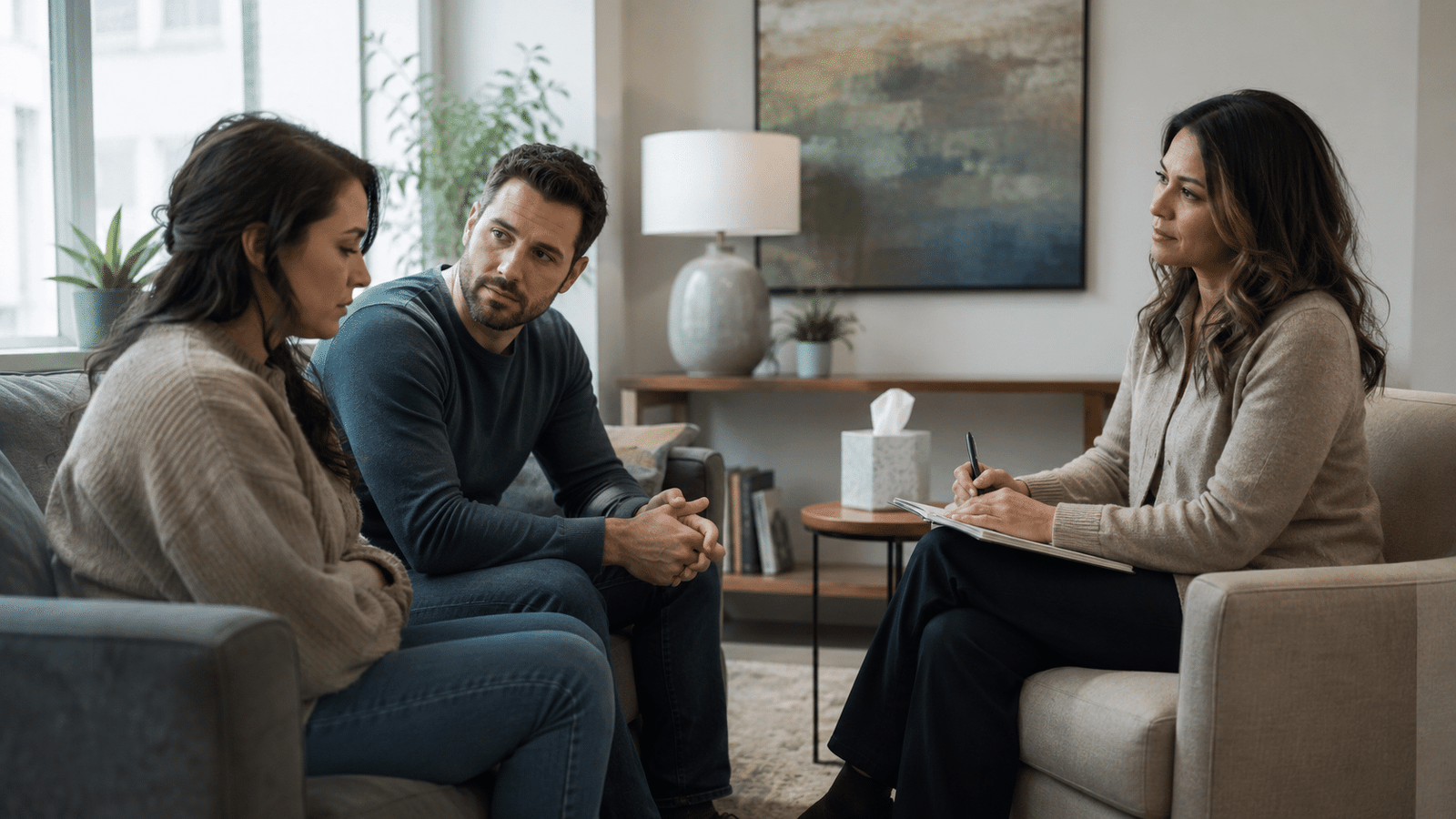
PTSD and Relationships: What to Do When Your Partner Pushes You Away
So, what is PTSD? PTSD stands for post-traumatic stress disorder. It develops after a person lives through or witnesses a traumatic event. The brain stays stuck in survival mode, even after real danger passes. Complex PTSD, or C-PTSD, comes from trauma that repeats over months or years. Both conditions change how a person connects with the people closest to them. Partners often notice sudden distance, silence, or emotional shutdown. This pattern confuses and hurts both people in the relationship. CPC Clinics helps Calgary couples understand this pattern and rebuild real connection through trauma-informed therapy.
PTSD vs Complex PTSD (C-PTSD)
PTSD and C-PTSD share one root cause: trauma. PTSD often follows a single overwhelming event, like an accident or an assault. C-PTSD develops from trauma that repeats, such as ongoing abuse or neglect. Both conditions shape how safe a person feels with others.
The two conditions show up differently in daily life. A person with PTSD may avoid one specific reminder, like a location. A person with C-PTSD often struggles with trust, shame, and identity more broadly. Both need proper support, and neither one is a personal flaw.
For example, a car accident survivor may avoid highways after PTSD. A childhood abuse survivor may struggle to trust any partner at all. The second pattern often points toward C-PTSD, not standard PTSD. Both patterns respond well to the right kind of therapy.
- PTSD: linked to one event, with a fairly predictable symptom pattern
- C-PTSD: linked to repeated trauma, often adds shame and identity struggles
- Both conditions: change trust, communication, and closeness in relationships
Symptoms of PTSD to Recognize
PTSD symptoms show up differently in each person. Most symptoms fall into four broad groups. These groups affect memory, mood, behavior, and physical reactions. Partners who notice this pattern respond with more patience and less blame.
Severity also varies a great deal from person to person. Some people manage daily life with mild, occasional symptoms. Others struggle with symptoms strong enough to disrupt work and relationships. A proper assessment maps out the exact severity and pattern.
- Intrusive memories, nightmares, or sudden flashbacks that replay the event
- Avoidance of people, places, or certain triggering conversations
- Negative changes in mood, guilt, or persistent self-blame
- Constant alertness, irritability, or ongoing trouble sleeping
What Are the 17 Symptoms of PTSD?
Mental health professionals once grouped PTSD into 17 specific symptoms. Current diagnostic guidelines now organize symptoms into four clusters instead. These clusters cover reliving the event, avoidance, negative thinking, and constant alertness. A licensed therapist reviews the full criteria during a proper assessment, not a quiz.
Behavioural Symptoms of PTSD
Behavioural symptoms of PTSD often show up before emotional ones do. A person may cancel plans, avoid crowds, or skip family events. This pattern is known as PTSD avoidance behavior, and it protects against overwhelm. Sudden anger, restlessness, or pacing can also appear without warning. Emotional shutdown trauma responses shield the brain from feeling too much at once. These behaviors are survival responses, not choices made on purpose.
PTSD Symptoms in Women
PTSD symptoms in women often include more anxiety and emotional numbness. Women report higher rates of guilt, shame, and hypervigilance than men. Sleep problems and sudden mood swings also appear often. These differences matter for building an accurate, personalized treatment plan.
How PTSD Affects Relationships
PTSD reaches beyond the person who carries it. This section covers PTSD and how it affects relationships day to day. Partners feel PTSD effects on relationships almost every day. Trust, closeness, and communication all shift under the weight of trauma. This understanding stops blame and starts real healing between both people.
Trauma and relationships often clash in painful, repeating ways. Small triggers can spark big reactions that neither partner expects. Over time, these trauma response behaviors in relationships create real distance. Talk about the pattern out loud. It helps both partners feel less alone, and less at fault.
Common PTSD Relationship Problems
PTSD relationship problems tend to follow familiar patterns. Early recognition prevents deeper misunderstanding down the road. Most of these patterns are protective, not intentional. This shift in view moves the focus from blame toward real solutions.
- Communication breaks down fast during moments of high stress
- Physical and emotional intimacy issues surface without warning
- Avoidance behavior replaces open, honest conversation
- Small triggers cause sudden emotional shutdown
- Trust rebuilds slowly, then breaks again after a new trigger
PTSD and Intimacy Issues
PTSD and intimacy issues often go hand in hand. Trauma teaches the nervous system that closeness can feel unsafe. Physical touch or emotional vulnerability may trigger old alarm signals. This reaction is automatic, and it fades with the right support. Slow, predictable steps toward closeness usually work better than sudden ones.
PTSD Communication Problems
PTSD communication problems usually start with fear, not anger. One partner may shut down instead of explaining their needs. The other partner may push harder, hoping for a response. This cycle repeats until both people learn a different pattern. A therapist can teach both partners a shared, calmer script.
Complex PTSD and Romantic Relationships
Complex PTSD and romantic relationships bring extra layers of difficulty. Repeated trauma teaches the brain that closeness can equal danger. This creates cycles that can feel like complex PTSD sabotaging relationships. Recognize the pattern first. That recognition starts real, lasting change.
These cycles often follow a clear shape. Closeness builds, then fear rises, then one partner pulls away fast. The other partner feels confused or rejected by the sudden shift. Name the cycle together, and it becomes easier to interrupt. For example, one partner may go quiet right after a good weekend. That timing is not random. It often signals that closeness felt like too much, too fast.
Can You Get PTSD from a Relationship?
People often type “can u get PTSD from a relationship” into a search bar. Yes, a relationship itself can cause PTSD. Repeated emotional or physical harm from a partner creates real trauma. This differs from a partner’s existing PTSD symptoms showing up later. A therapist helps sort out which pattern fits your specific situation. Either way, the trauma is real and deserves proper care.
PTSD and Emotionally Abusive Relationships
PTSD symptoms and abusive relationship patterns can look similar from the outside. Withdrawal caused by trauma differs from control or manipulation. The two can look alike, but the difference matters for safety. Speak with a professional if you feel unsafe with your partner.
Childhood Trauma and Relationship Issues
Childhood trauma and relationship issues often connect through attachment styles and trauma. A person’s earliest bonds shape how they trust adults later in life. Insecure attachment can lead to fear of abandonment or fear of closeness. These early patterns often show up strongly in adult romantic relationships. Therapy can help a person build a more secure attachment style over time.
Trauma Bonding and Codependency
Trauma and codependency often develop together inside difficult relationships. Trauma bonding and codependency create a strong pull toward an unhealthy cycle. One partner may over-function to manage the other person’s pain. This cycle usually breaks with the right outside support. Individual therapy helps each partner rebuild a stronger sense of self.
What to Do When Your Partner Pushes You Away
Withdrawal from a partner with PTSD is not rejection. It reflects a nervous system trying to feel safe again. This section explains how to deal with a partner with PTSD. It also covers how to deal with PTSD partner triggers day to day. These steps support both people through genuinely hard moments.
- Stay calm during their emotional shutdown
- Ask before offering comfort or advice
- Give space without disappearing completely
- Avoid taking their silence personally
- Reconnect gently once they feel regulated
- Encourage professional support without pressure
Small, steady actions build trust faster than big gestures. Consistency matters more than perfect words in these moments. Your calm presence signals safety to a dysregulated nervous system. Over time, this steadiness helps rebuild the connection you both want.
What Not to Do When Your Partner Withdraws
Certain reactions tend to make PTSD withdrawal worse, not better. Repeated requests for reassurance often deepen a partner’s need to retreat. Ultimatums rarely calm a nervous system stuck in threat mode. A softer, steadier approach protects the relationship far better than pressure.
- Avoid demanding an explanation during the shutdown itself
- Avoid comparing their response to a “normal” reaction
- Avoid withdrawing yourself as a way to match their silence
Trauma-Informed Communication Tips
A trauma informed approach to communication changes the outcome. Trauma informed communication slows the pace and lowers pressure. Short, clear sentences work better than long explanations. This approach lowers the chance of triggering another shutdown.
PTSD Treatment and Therapy Options
Many people search PTSD treatments therapy options after a hard week. The right treatment for PTSD therapy takes some research to find. No single method works the same way for everyone. A licensed therapist builds a plan around each person’s specific history.
- Cognitive behavioral therapy PTSD programs reshape unhelpful thought patterns
- EMDR processes traumatic memories in a structured, guided way
- Couples therapy for PTSD supports communication and rebuilding trust
- Cognitive behavioral couples therapy for PTSD combines both approaches together
Cognitive behavioural therapy for PTSD is also simply called CBT. PTSD counselling gives a safe space to process trauma at your own pace. Couples therapy addresses the relationship pattern, not just one partner’s symptoms. CPC Clinics offers these approaches alongside trauma-focused options for individuals and couples.
Progress in trauma therapy tends to build slowly, session by session. Some weeks feel easier than others, and that pattern is normal. A skilled therapist adjusts the pace to match each person’s readiness. This flexible approach keeps therapy realistic instead of overwhelming.
Supplements for PTSD
Supplements for PTSD are not a proven treatment on their own. No supplement replaces therapy or professional trauma-focused care. Always talk to a doctor before adding any new supplement. This keeps your full treatment plan safe and properly coordinated.
PTSD Therapy at CPC Clinics in Calgary
CPC Clinics offers PTSD therapy Calgary couples and individuals can access fast. Our PTSD counselling Calgary team responds within one to two days. Sessions run in person or online, based on your comfort. Direct billing works with more than 30 insurance providers.
- Free 20-minute consultation to start your journey
- Matched with a therapist within 24 to 48 hours
- EMDR, CBT, and Gottman Method available on-site
- Individual and couples sessions offered, virtual or in person
CPC Clinics stands ready to support your relationship through trauma recovery. A trained therapist listens first and builds a plan around your story. Book your free consultation today and take the first real step.
Frequently Asked Questions
How to Deal with PTSD in a Relationship?
Learn the person’s specific triggers and avoid pushing during a shutdown. Stay patient and keep communication short and clear. Give space when it’s needed, then reconnect gently. Professional support helps both partners build healthier, lasting patterns. Small daily habits, kept consistent, matter more than one big conversation.
How to Support Partner with PTSD?
Listen without trying to fix every problem right away. Respect their need for space during genuinely hard moments. Ask what kind of support they actually want. Encourage professional treatment gently, without pressure or ultimatums. Take care of your own needs too, so support feels sustainable.
How to Support a Partner with Complex PTSD?
Complex PTSD needs extra patience around trust and shame. Consistency matters more than grand gestures here. Small, repeated acts of reliability rebuild a sense of safety. A trauma-informed therapist supports both of you through the process. Progress often looks slow, steady, and easy to miss day to day.
Can PTSD Ruin Relationships?
Untreated PTSD can strain a relationship significantly over time. Communication gaps and emotional distance tend to grow without support. Treatment and consistent support often rebuild trust and closeness. Many couples find new strength after facing trauma together. Early support tends to make the biggest long-term difference.
How to Communicate with a Partner Who Has PTSD?
Keep your tone calm and your sentences short. Avoid sudden or sharp questions during moments of stress. Ask what kind of support feels helpful right now. Patience and consistency matter more than finding perfect words. A couples therapist can model this style until it feels natural.
CPC Clinics walks alongside Calgary couples navigating PTSD, one session at a time. Reach out today for a free 20-minute consultation.